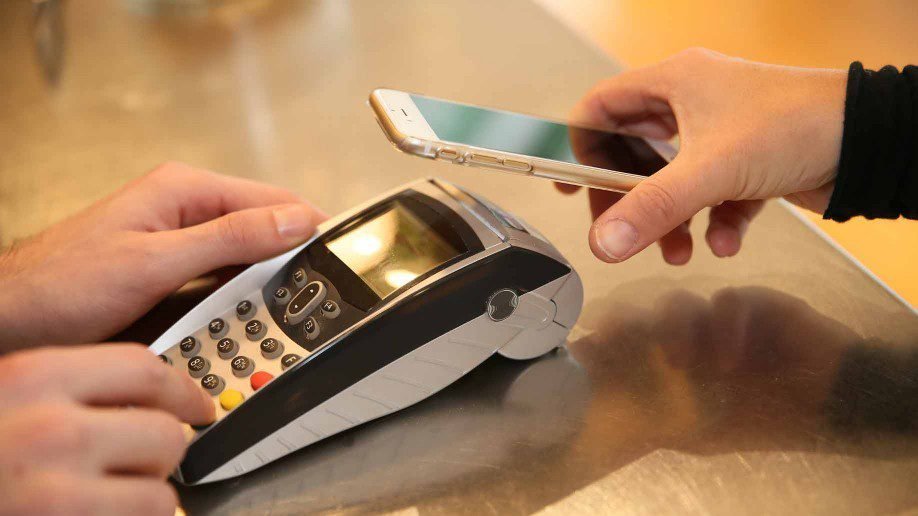

If you’ve ever found yourself short on cash between paychecks or facing an unexpected expense, you’ve probably considered micropayment cashing. It’s a lifesaver when you need quick money, but here’s the catch: the fees can be shockingly high. We’re talking anywhere from 10% to 28% of what you’re trying to convert into cash.
That’s right. If you need ₩1,000,000 in cash today, you might pay up to ₩280,000 just in fees. That’s more than a week’s groceries, a tank of gas, or that pair of shoes you’ve been eyeing. The question is: are you paying more than you should?
In this guide, we’re breaking down everything you need to know about micropayment cashing fees in Korea for 2026. We’ll show you which services offer the best rates, how to spot hidden fees, and most importantly, how to keep more of your hard-earned money in your pocket.
Breaking Down the Fees
When you use a micropayment cashing service, 소액결제현금화, you’re not just paying one simple fee. There are actually several costs hidden in that final number you receive:
Service Commission
Service Commission is the big one, typically 8-25% of your total amount. This is the main cut the service takes for processing your transaction.
Processing Fees
Processing Fees are fixed costs, usually ₩5,000 to ₩20,000, charged regardless of how much you’re converting. This is why small transactions are such a bad deal—that ₩10,000 processing fee on a ₩100,000 conversion is effectively an extra 10% on top of the percentage fee.
Transfer Fees
Transfer Fees come into play depending on how you want your money. Direct bank transfers might be free, but instant transfers or cash pickup options can add another ₩1,000 to ₩5,000.
Same-Day Premium Fees
Same-Day Premium Fees are the “rush shipping” of the cashing world. Need money in your account within an hour? That’ll cost you an additional 2-7% on top of everything else.
The 2026 Fee Landscape: Who’s Charging What?
After analyzing over 15 different micropayment cashing services in Korea, we’ve identified three clear tiers of providers. Each targets different customer needs, and understanding which tier fits your situation can save you serious money.
Premium Services: For When You Have Time and Want Better Rates
Premium services like Digital Cash Korea (10-18% fees) and FastPay Solutions (11-19% fees) offer the best rates in the market. But there’s a trade-off: they require minimum transactions of ₩300,000 to ₩500,000, and you’ll wait 2-4 hours for your money.
Let’s say you need to convert ₩2,000,000. With a premium service charging 15%, you’d receive ₩1,700,000. That ₩300,000 in fees stings, sure, but compare it to what you’d pay elsewhere, and suddenly it looks like a bargain.
Quick Cash Mobile sits in the middle of the premium tier at 12-20%, with a more accessible ₩200,000 minimum. They charge a small ₩3,000 transfer fee, but if you’re converting ₩1,000,000 at their 17% rate, you’d get ₩827,000 back. Not bad.
Standard Services: The Sweet Spot for Most People
Most Koreans end up using standard services like CashNow Express (15-22%) or MobileCash Korea (16-23%). These are your middle-ground option,s not the cheapest, not the fastest, but reliably available with reasonable minimums of ₩100,000.
CashNow Express is particularly popular for urgent transactions. They process in 30 minutes to an hour, but you’ll pay 19% plus a ₩5,000 transfer fee on that ₩1,000,000 conversion. Total cost? ₩195,000 in fees, leaving you with ₩805,000.
MobileCash Korea runs slightly cheaper at 18% plus ₩2,000, netting you ₩818,000 from that same ₩1,000,000. If you’re not in a massive rush, the extra 30-60 minutes of waiting saves you ₩13,000.
Budget Services: When You’re Desperate
Budget services like InstantCash24 (18-25%) and QuickCash Mobile (20-28%) charge the highest fees, but they’ll take your business when others won’t. Got only ₩50,000 to convert? They’ll do it. Need money in 15 minutes? They’ve got you.
The catch? QuickCash Mobile might charge you 24% plus an ₩8,000 transfer fee. On a ₩500,000 conversion, that’s ₩120,000 in fees plus ₩8,000, you’re walking away with just ₩372,000. Nearly a third of your money went to fees.
The ₩1,000,000 Test: A Real-World Comparison
Want to see the fee difference in action? Let’s say you need exactly ₩1,000,000 in cash. Here’s what you’d actually receive from each service after fees:
- Digital Cash Korea: ₩850,000 (15% fee, no transfer fee)
- FastPay Solutions: ₩840,000 (16% fee, no transfer fee)
- Quick Cash Mobile: ₩827,000 (17% + ₩3,000)
- MobileCash Korea: ₩818,000 (18% + ₩2,000)
- CashNow Express: ₩805,000 (19% + ₩5,000)
- InstantCash24: ₩780,000 (21% + ₩10,000)
- QuickCash Mobile: ₩752,000 (24% + ₩8,000)
The difference between the best and worst options? ₩98,000. That’s nearly 10% more money in your pocket just by choosing the right service. For what it’s worth, that’s enough to cover two weeks of lunch or a nice dinner out.
Five Factors That Secretly Inflate Your Fees
Understanding what drives fees higher helps you avoid unnecessary costs. Here are the biggest fee inflators:
- Transaction Size Matters More Than You Think
The amount you convert dramatically impacts your percentage fee. Converting small amounts is a terrible deal because processing costs don’t scale down proportionally.
Here’s the typical breakdown:
- ₩50,000-₩300,000: You’re paying 20-28% (ouch)
- ₩300,000-₩500,000: Drops to 18-23%
- ₩500,000-₩1,000,000: Falls to 15-20%
- ₩1,000,000-₩3,000,000: Down to 12-18%
- ₩3,000,000+: Best rates at 10-15%
The lesson? If you can wait and batch your conversions into larger amounts, you’ll pay significantly less in percentage terms.
- Timing Is Everything
When you submit your request has a huge impact on fees. Business hours (Monday-Friday, 9 AM- 5 PM) offer standard rates. But try to cash out on Sunday at 11 PM, and you could see fees spike by 5-7%.
Here’s how timing affects costs:
- Business hours: Standard rates (your baseline)
- Evenings (5 PM-10 PM): Add 1-3%
- Weekends: Add 2-4%
- Holidays: Add 3-5%
- Late night (10 PM- 6 AM): Add 5-7%
On a ₩1,000,000 transaction, that late-night premium could cost you an extra ₩50,000-₩70,000. Is your midnight emergency worth an extra ₩50,000? Sometimes yes, but usually no.
- Speed Costs Money
The faster you need your cash, the more you’ll pay. It’s the same principle that expedited shipping convenience comes at a premium.
- Instant processing (under 30 minutes): Base fee + 5-7%
- Same-day (1-4 hours): Base fee + 2-4%
- Next-day processing: Standard base fee
- 2-3 day processing: Sometimes a 1-2% discount
Most people don’t actually need instant processing. If you can plan even a few hours, you’ll save considerable money.
- Loyalty Pays Off
Unlike most financial services, micropayment cashing rewards repeat customers with lower fees:
- First-time users: Pay standard rates (no discount)
- Regular users (3-5 transactions): Get a 1-2% discount
- High-volume users (₩5,000,000+ monthly): Receive 3-5% discount
- VIP tier (₩10,000,000+ monthly): Negotiate custom rates (often 5-8% off)
If you’re a frequent user, stick with one service. That loyalty discount can save you tens of thousands of won monthly.
- Hidden Fees Lurk Everywhere
Beyond the advertised rates, watch for these sneaky costs:
- Declined transaction fees of ₩10,000-₩30,000 if your request gets rejected after processing starts. Always verify your micropayment limit before applying.
- Partial processing fees charge you the full percentage on what you requested, not what was actually processed. If you request ₩1,000,000 but only have ₩700,000 available, some services still charge fees on the full million.
- Refund fees of ₩15,000-₩50,000 if you cancel after submission but before completion.
How to Pay Less: Proven Strategies That Actually Work
Strategy 1: Batch Your Transactions
Instead of converting ₩300,000 three times a month at 20% each (₩180,000 in total fees), accumulate to ₩900,000 and convert once at 14% (₩126,000 in fees).
Annual savings: ₩648,000. That’s a weekend trip or a nice shopping spree, completely funded by smarter timing.
Strategy 2: Use the Tuesday-Thursday Sweet Spot
Industry data shows Tuesday through Thursday, 10 AM-3 PM, offers the lowest fees. Weekend and holiday requests can cost 5% more.
Converting ₩1,000,000 on Tuesday at 2 PM versus Sunday at 8 PM:
- Tuesday: 15% base = ₩150,000 fee
- Sunday: 15% + 3% weekend + 2% evening = 20% = ₩200,000 fee
You save: ₩50,000 with better timing.g
Strategy 3: Compare Before Every Transaction
Rates fluctuate based on platform capacity and demand. Service A might offer 15% today while Service B charges 17%. Next week, those positions might flip.
Spending 5 minutes comparing 2-3 services before each transaction can save ₩30,000-₩60,000 per conversion. Over a year, that’s ₩360,000-₩720,000 for regular users.
Strategy 4: Build Loyalty With One Provider
After 3-5 transactions with the same service, you typically qualify for loyalty discounts of 1-2%. High-volume users (₩5,000,000+ monthly) can negotiate 3-5% discounts.
On ₩12,000,000 annual volume, a 4% loyalty discount saves ₩480,000 yearly.
Strategy 5: The Ultimate Solution—Build an Emergency Fund
Here’s the uncomfortable truth: if you’re regularly converting micropayments at 15-20% fees, you’re bleeding money.
Real calculation: Converting ₩500,000 monthly at 18% costs ₩1,080,000 annually in fees. Instead, what if you built a ₩2,000,000 emergency fund over time? After less than two years, you’d break even, and from then on, you’d save that full ₩1,080,000 every single year.
How to Spot Fee-Related Scams
Not all micropayment cashing services are legitimate. Watch for these warning signs:
- Fees over 30% are exploitation, not business. Legitimate services max out around 2,8% even for tiny urgent transactions.
- Upfront payment requirements are classic scam tactics. Real services deduct fees from your proceeds, never before processing.
- No fee breakdown means hidden costs. Reputable services provide itemized fee schedules.
- Pressure tactics like “this rate expires in 10 minutes” are designed to rush you into bad decisions.
- Unverifiable company information is a massive red flag. If you can’t find a business registration number or physical address, run.
The Long-Term Perspective: What You’re Really Paying
Let’s look at what regular micropayment cashing actually costs over time.
Scenario: Office worker converting ₩500,000 monthly
With high-fee service (22% average):
- Monthly fees: ₩110,000
- Annual cost: ₩1,320,000
- Five-year cost: ₩6,600,000
With mid-fee service (16% average):
- Monthly fees: ₩80,000
- Annual cost: ₩960,000
- Five-year cost: ₩4,800,000
With low-fee service (13% average):
- Monthly fees: ₩65,000
- Annual cost: ₩780,000
- Five-year cost: ₩3,900,000
The difference between best and worst? ₩2,700,000 over five years. That’s a used car. A significant chunk of a down payment on a home. Multiple overseas vacations.
Alternatives Worth Considering
Before accepting high micropayment cashing fees, explore these options:
- Personal bank loans charge 5-15% annually, much cheaper than 15-20% per transaction.
- Credit card cash advances 신용카드현금화 cost 3-5% upfront plus interest, often totaling less than 20% micropayment fees for qualifying users.
- Peer-to-peer lending offers 8-18% annual rates with 2-3 day processing.
- Employer salary advances are often free or charge minimal 1-3% fees.
For amounts over ₩1,000,000 or non-urgent needs, these alternatives almost always cost less than micropayment cashing.
Summary
Micropayment cashing serves a real need, quick liquidity when you’re in a bind. But knowledge is power, and understanding the fee landscape helps you keep more of your money.
The key takeaways:
- Choose premium services for amounts over ₩500,000 when time permits. The 5% fee difference is worth waiting a few hours.
- Batch transactions to access better rate tiers. Converting larger amounts less frequently saves substantially.
- Use business hours (Tuesday-Thursday, 10 AM-3 PM) to avoid peak-time premiums.
- Compare 2-3 services before each transaction. Rates vary, and 5 minutes of research saves thousands.
- Build loyalty with one provider to unlock discount tiers over time.
- Most importantly, you work toward building an emergency fund that eliminates the need for expensive micropayment cashing altogether.
Yes, fees of 10-28% are the current reality in Korea. But you don’t have to accept the high end of that range. With smart choices, strategic timing, and a bit of planning, you can consistently access the lower-cost options and keep more money where it belongs in your wallet.
For current rates and comprehensive comparisons, visit bankon.me, your trusted source for micropayment cashing information in Korea.